Discovery
Discuss age, comfort, mode, and starting needs.
Premium abacus and mental math program
How it works
The process is deliberately simple: understand the learner, introduce bead movement, practise in short rounds, and communicate next steps clearly.
Discuss age, comfort, mode, and starting needs.
Move beads, solve short sums, and use worksheets.
Share level fit, home practice, and next steps.

Inside a class
A class has a rhythm: warm up, move beads, picture the beads, practise on paper, and hear what to fix.
01
Quick number exercises help children settle in and start with confidence.
02
Children use the abacus to understand place value and operations visually.
03
The teacher guides learners from physical beads to mental images.
04
Short practice rounds build accuracy, speed, and calm problem-solving.
05
Parents and students receive simple next steps after practice.
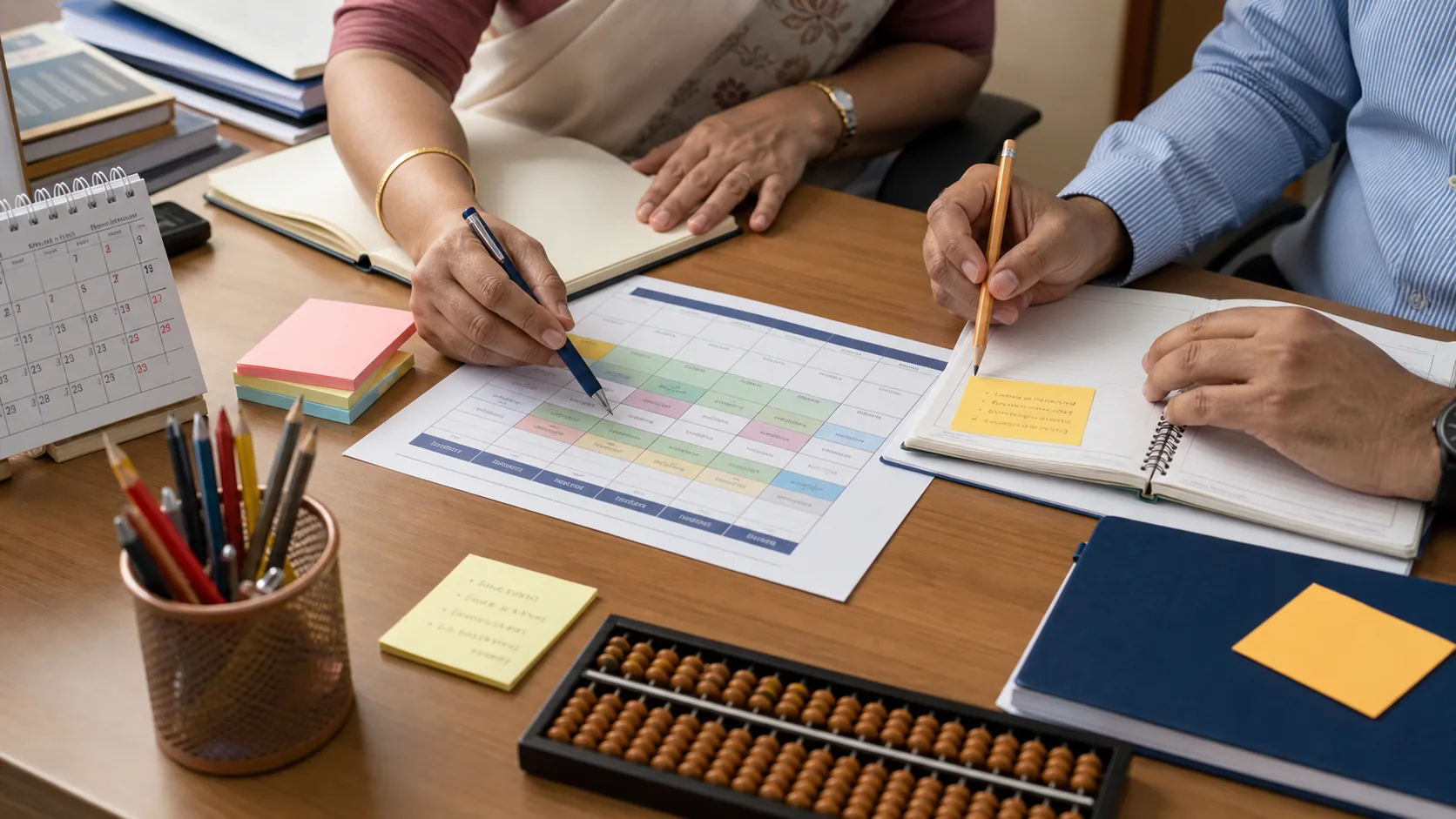
Implementation begins with clear timing, responsibilities, and worksheet rhythm.

Children learn in short, visible practice cycles that the teacher can observe.

Parents and schools get practical next-step conversations, not exaggerated guarantees.
Demo to enrolment
The demo path helps families decide with more clarity and less pressure.
01
The team checks your preferred time and confirms how the demo will happen.
02
Your child tries bead movement, a few sums, and a short worksheet-style task.
03
The teacher suggests a starting level based on age, focus, and number comfort.
04
You choose the program, mode, and batch only if it feels right for your child.
Learning stages
The path changes gradually as children move from physical bead practice toward mental images and review.
Children learn bead values, number comfort, and classroom rhythm.
Learners start shifting from physical abacus work to mental images.
Timed practice is introduced carefully with teacher correction.
Level tests and progress notes help families decide the next step.
Book a discovery call or demo and review the class rhythm with the team.