Foundations
Bead values, number names, and classroom rhythm.
Premium abacus and mental math program
Programs / Students
Choose a level that fits the child today. Beginners start with bead values, older learners build speed carefully, and every stage keeps practice visible.
Bead values, number names, and classroom rhythm.
Operations, visualization, and worksheet discipline.
Longer sums, speed control, and assessment readiness.

Program comparison
The demo helps confirm placement, but the cards below explain the broad learning intent for each stage.
Ages 5-7
First-time learners who need playful number confidence.
Understand bead values and basic operations
Build a calm practice rhythm
Try number tasks without freezing
Ages 8-10
Children who can follow steps and need steadier practice.
Move from abacus work to mental visualisation
Improve accuracy under light time pressure
Build steady worksheet completion habits
Ages 10-14
Older learners who like challenge and want stronger speed.
Improve multi-step mental calculation
Develop speed with accuracy checks
Prepare for advanced level assessments
Learning journey
The route is gradual: touch the beads, understand place value, practise on paper, then visualize with more independence.
01
Children learn bead values, number comfort, and classroom rhythm.
02
Learners start shifting from physical abacus work to mental images.
03
Timed practice is introduced carefully with teacher correction.
04
Level tests and progress notes help families decide the next step.
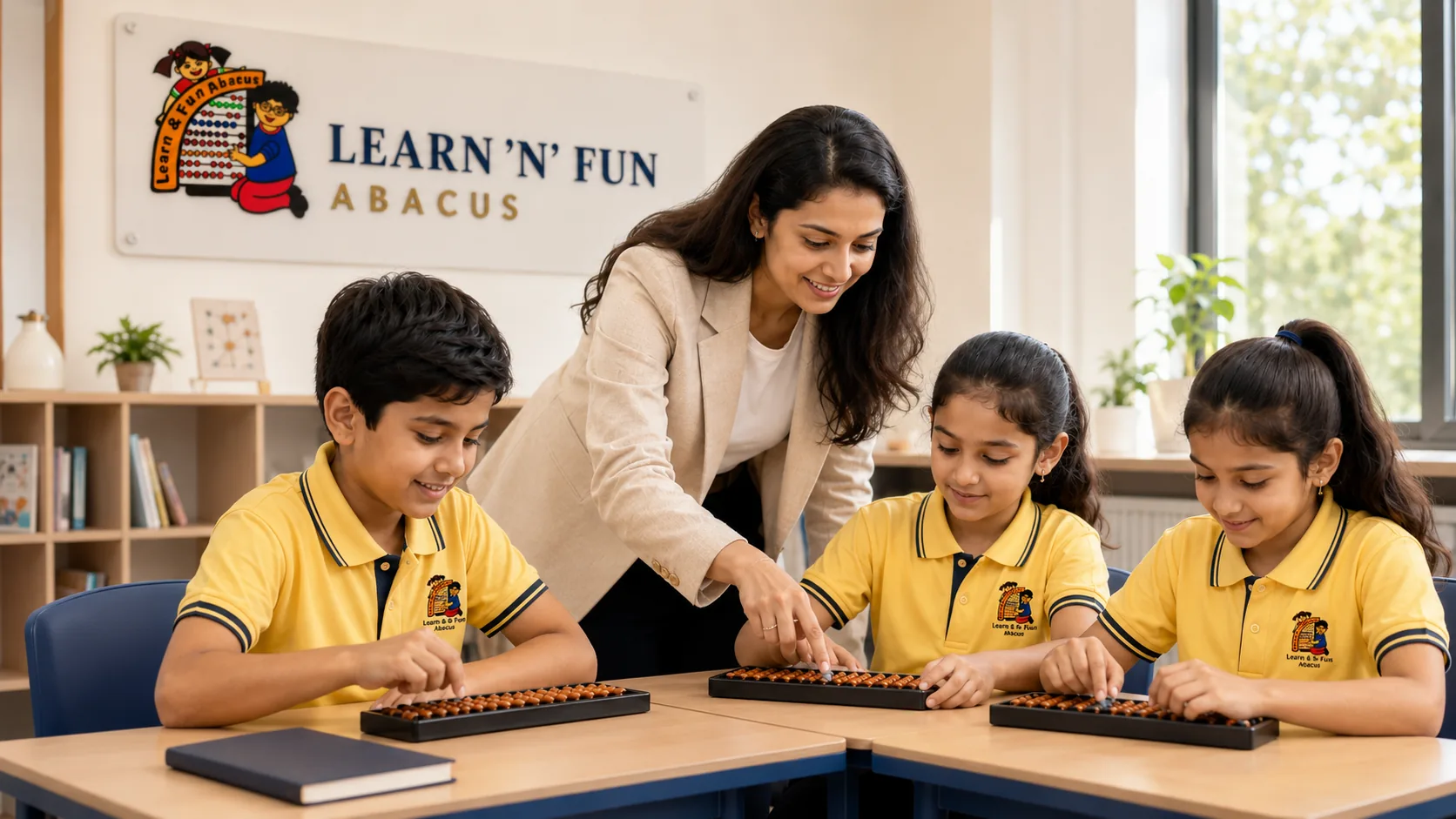
Children practise with teacher correction before they are expected to work independently.

Written practice keeps each level repeatable and visible to parents.

Online and offline options can be discussed during the demo depending on family needs.
Tools and resources
Worksheets, flash cards, timed practice, and level checks work best when matched to the child's current level.
Children move beads, see numbers taking shape, and slowly learn to calculate without counting on fingers.
Level-wise worksheets that keep home practice simple and trackable.
Quick recall practice for visualisation, memory, and rhythm.
Short challenges designed to improve speed without pressure overload.
Assessment checkpoints that help parents see readiness for the next level.
Achievement area for future level completion certificates.
FAQ
Short answers for families who want a clear starting point before booking a demo.
Most children can begin around age 5, but the right starting level depends on attention span, number comfort, and class readiness.
Book a free demo and we will recommend the right starting level after seeing your child's age, comfort, focus, and current number skills.